Ask most travelers what Gujarat has to offer, and the answers repeat quickly: Gir's lions, Rann of Kutch, Statue of Unity. These are well-earned reputations, but they represent only a fraction of what the state actually holds.
Beyond the well-trodden circuit lies a second layer of Gujarat - Jain pilgrimage hills carved into mountain rock, marine sanctuary with coral reefs on India's west coast, sun temple built with astronomical precision, and hill station most Indian travelers have never heard of.
Why “Hidden Gems” Matter-And What They Cost You
Offbeat experience offers something the established circuit increasingly cannot: empty spaces, unhurried encounters, and more intimate window into local life. Places visited by few typically have fewer English-speaking guides, accommodation of less standardized quality, and physical infrastructure that has not been scaled to meet high tourist volume.
Choosing the hidden gem is choosing authenticity over convenience, solitude over predictability.
It is a fair trade for some travelers, and not for all.
1. Palitana - India’s Largest Jain Pilgrimage Site
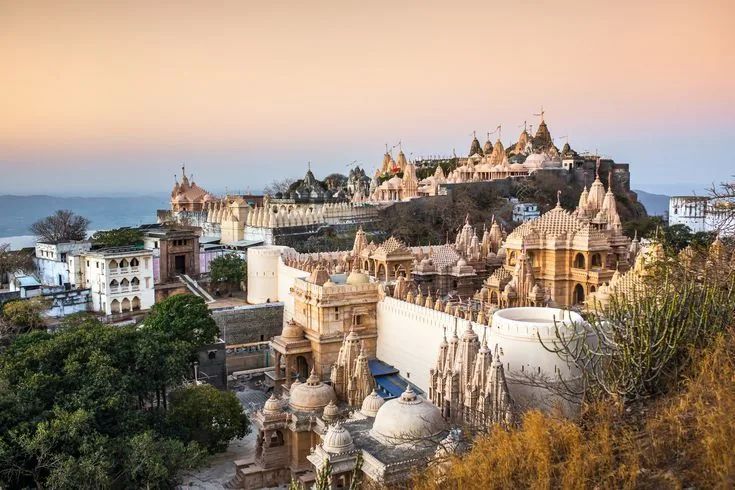
Perched on top of Shatrunjaya Hill in western Gujarat, Palitana is home to more than 900 ornately carved marble temples that spill across the hilltop. It is among the holiest pilgrimage destinations in the world for Jains, yet remains largely outside religious and heritage-travel circles.
Tradeoff: The temple complex requires climbing about 3,800 steps, or you can take a doli (a carrying chair pushed by bearers). It is not easily accessible for travelers with mobility limitations, nor for those with time constraints. The climb is best attempted at dawn for cooler temperatures and better light-meaning you will need to wake before light if you want to reach the summit to explore the intricate architecture.
2. Champaner - Pavagadh - A UNESCO Site That Travelers Skip
This UNESCO World Heritage Site, though formally designated as significant, attracts a tiny fraction of the visitors of Gujarat’s star attractions. The archaeological park consists of Hindu and Islamic architectural elements, from mosques and palaces to intricately decorated step-wells, and the popular Kali Mata Temple crowning the top of the hill.
Tradeoff: Because it is not widely commercialized, on-site interpretive signage and guided tours are limited. Travelers wishing for detailed historical information on the site typically have to arrange for an English-speaking guide in advance.
3. Marine National Park, Jamnagar - India’s First Marine Sanctuary
Off the coast of Gujarat, near Jamnagar, is India’s only Marine National Park, a coastal ecosystem featuring coral reefs, mangroves, and the varied marine life associated with the Arabian Sea-a natural treasure far from Gujarat's desert reputation. Boat trips out to the Pirotan and Narara islands offer encounters with some of India’s unique coastal wildlife.
Tradeoff: This park’s biggest drawback is that access is almost entirely dependent on tidal timings-reefs are only exposed at low tide, and boats can be canceled without much notice due to weather or tidal patterns. This makes it one of the less predictable of Gujarat’s offbeat attractions and necessitates leaving room for a potential buffer day in your schedule rather than fixing a date.
4. Saputara - Gujarat’s Only Hill Station
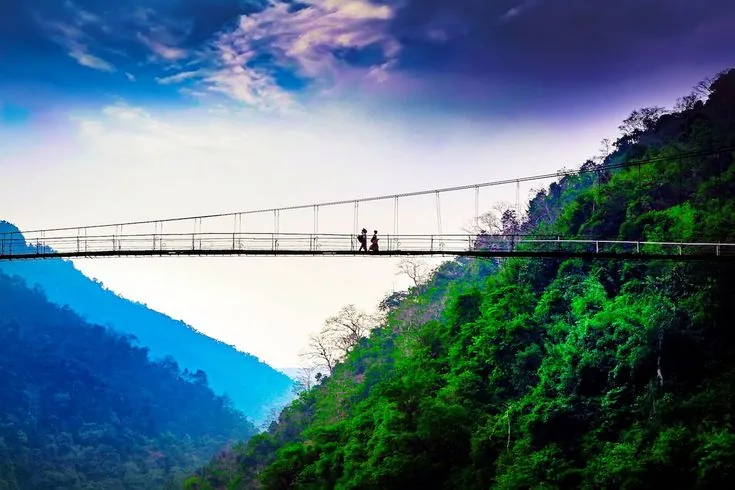
Tucked into the Sahyadri hills near the Maharashtra border, Saputara is Gujarat’s sole hill station, a cool-climate antidote to the hot and often dry state. The area, with its lake, waterfalls, and forest, appeals to travelers seeking a tranquil escape. The highlight includes boating on the lake, exploring tribal museums, and taking in the panoramic views over the Dang forests from various viewpoints.
Tradeoff: Because of its secluded location, many travelers overlook it, leaving it largely off the typical Gujarat circuit. It’s also closer to Mumbai/Maharashtra than it is to most major Gujarat cities like Ahmedabad or Vadodara, meaning it’s easier to combine with a visit to Maharashtra. This can require some itinerary re-organization, as simply adding it as a stop might not fit neatly within a more traditional Gujarat route.
5. Modhera Sun Temple - Temple Designed for Equinox Alignment
Built in 1026, the Modhera Sun Temple is designed to align precisely with the sun’s rays on the spring and autumn equinoxes-an incredible feat of engineering akin to the solar alignments found at other major world heritage sites. Yet, it draws comparatively few visitors.
Tradeoff: Unless you plan your trip around the precise time of an equinox (around March and September), you will visit this architectural marvel without seeing it in its full glory, when sunlight floods the central shrine. To see the effect, the entire trip needs to be timed around these specific days.
6. Nal Sarovar Bird Sanctuary - Haven for Migratory Birds Near Ahmedabad
Just a short drive (around 65 kilometers) west of Ahmedabad is Nal Sarovar Bird Sanctuary. Between November and February, this shallow lake transforms into a vibrant spectacle, hosting tens of thousands of migratory birds, including flamingos, pelicans, and various species of cranes.
Tradeoff: As a habitat for migratory birds, its appeal is largely seasonal. If you visit outside the Nov-Feb window, there may be little activity, rendering this otherwise convenient and easy-to-visit offbeat attraction less worthwhile.
7. Mandvi - Quieter Alternative to Diu's Beaches
On Gujarat’s Kutch coastline is Mandvi, a coastal town known for its active shipbuilding yard where traditional dhows are still made by hand. It also offers a less commercialized and generally quieter beach experience compared to the more developed tourism at Diu.
Tradeoff: What Mandvi lacks in organized water sports and slick beachfront resorts it makes up for in authentic coastal charm and peaceful atmosphere. Travelers will find a more down-to-earth experience here, and it may appeal more to those looking to observe traditional craftsmanship and enjoy a laid-back vibe than those seeking a full-blown beach vacation.
The Bigger Planning Question: Hidden Gems vs Headlines
For many travelers, the question is less whether to see a few lesser-known spots but rather how to fit them in alongside Gujarat’s signature attractions, especially when time is limited.
Travel Time: Most of the offbeat destinations require dedicated travel time and do not lie conveniently along the primary routes between major attractions.
This means that adding each new site may push back your itinerary’s overall schedule or necessitate an additional travel day.
Services and Interpretation: Due to lower visitor numbers, dedicated guides or standardized facilities are often not as readily available as they are in the more popular areas.
This can mean either accepting a less-detailed understanding of a place or spending time and effort pre-arranging services.
Seasonality: Many of the gems highlighted here, such as Modhera during the equinox or Nal Sarovar during the bird-migrating season, are highly time-sensitive.
For these sites, timing can be the single most critical factor determining the quality of the experience-arguably more so than with Gujarat's top attractions, which remain impressive year-round.
Implications for Decision-Making: Travelers with flexible dates and an inclination toward slow and curated travel will benefit most from prioritizing several of these hidden gems.
For travelers with tight schedules or for first-time visitors to Gujarat, a better approach might be to select one or two offbeat locations to weave into a broader trip based on geographical logic rather than making the offbeat experience the focus.
Conclusion
Gujarat's hidden gems don't compete with its famous sites so much as complete the picture of what the state actually offers - Jain pilgrimage architecture, marine ecosystems, a hill station, and precision solar temples, all largely free of crowds.
The tradeoff is real: less infrastructure, more timing sensitivity, and itineraries that require more deliberate planning than the standard circuit. But for travelers willing to plan around it, the payoff is a version of Gujarat few visitors ever see.
FAQs
1. What is the best time to visit Gujarat's hidden gems?
Mostly November to February, when weather is cooler and sites like Nal Sarovar and the Rann region are at their seasonal best.
2. Is Palitana difficult to visit for someone with limited fitness?
Yes, reaching the temples involves climbing around 3,800 steps, though a doli (carried chair) is available for those unable to trek.
3. Can these offbeat places be added to a standard Gujarat itinerary?
A couple can be added easily (like Nal Sarovar near Ahmedabad), but others, like Saputara or the Marine National Park, need dedicated extra days.
4. Are hidden gems in Gujarat safe and accessible for solo travelers?
Generally yes, though guide availability and English signage are limited, so pre-arranged local guides are recommended.
5. Do I need a guide to visit these lesser-known sites?
Not mandatory, but strongly recommended for historical sites like Champaner-Pavagadh and Modhera, where on-site context is minimal.
Want to explore Gujarat beyond the obvious stops?
Bayard Vacations builds custom itineraries that blend Gujarat's headline attractions with its lesser-known destinations — timed to the season that makes each one worth visiting.
Explore Gujarat Packages
Start Your Adventure
Our travel experts are ready to plan your next dream vacation.
No spam, only pure inspiration.